
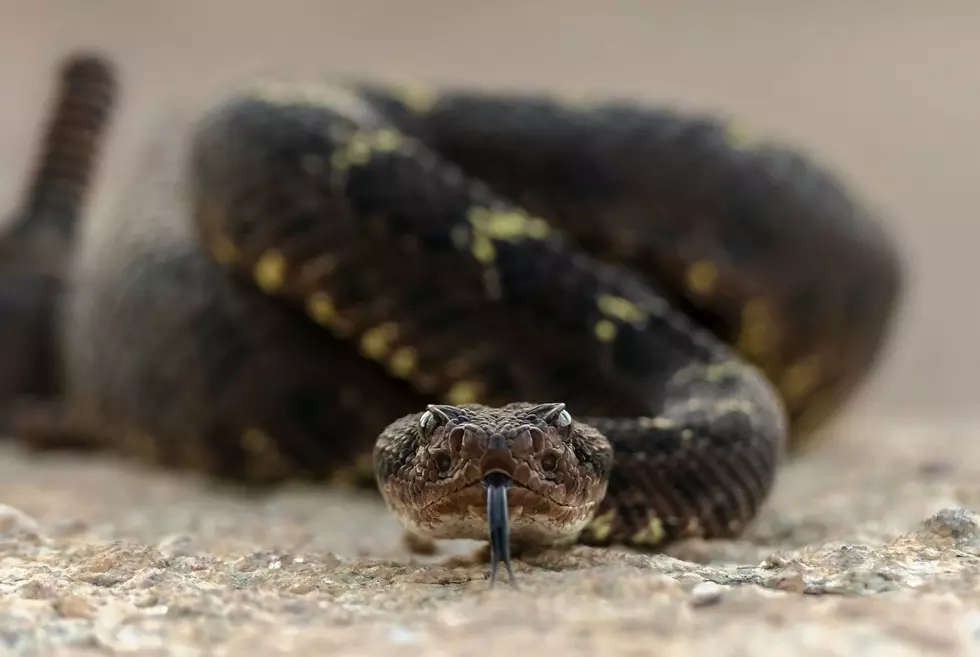
Missouri’s 5 Venomous Snakes and How to Avoid Them
As a lifelong Missourian, I've lived with the fact that there are 5 very dangerous snakes in our state and my strategy remains to be where they are not. It would be wise to have more information than that as you need to understand how to identify the 5 venomous snakes in Missouri and how to avoid them.
What many don't understand is that all snakes that are native to Missouri are protected and it's illegal to kill them according to the Department of Conservation. There are 5 exceptions and that includes the following venomous snakes when they are close to people.
Eastern Copperhead — Agkistrodon contortrix
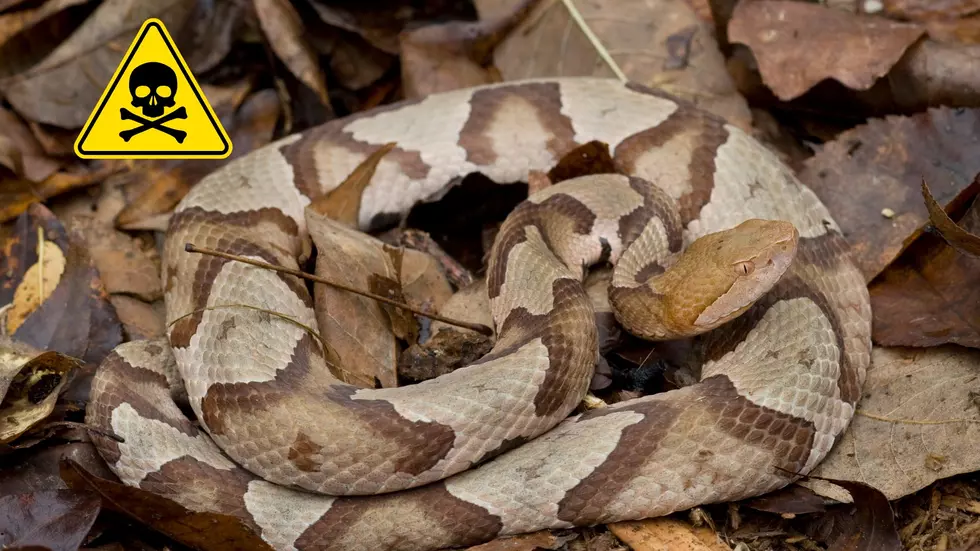
The Eastern Copperhead has a tan or light brown body marked with 10 to 18 darker, hourglass-shaped crossbands with a wide triangular head with a coppery-red tint. You'll find them on rocky hillsides plus they often like to hang out in old barns, stone walls or wooded plots.
Northern Cottonmouth — Agkistrodon piscivorus
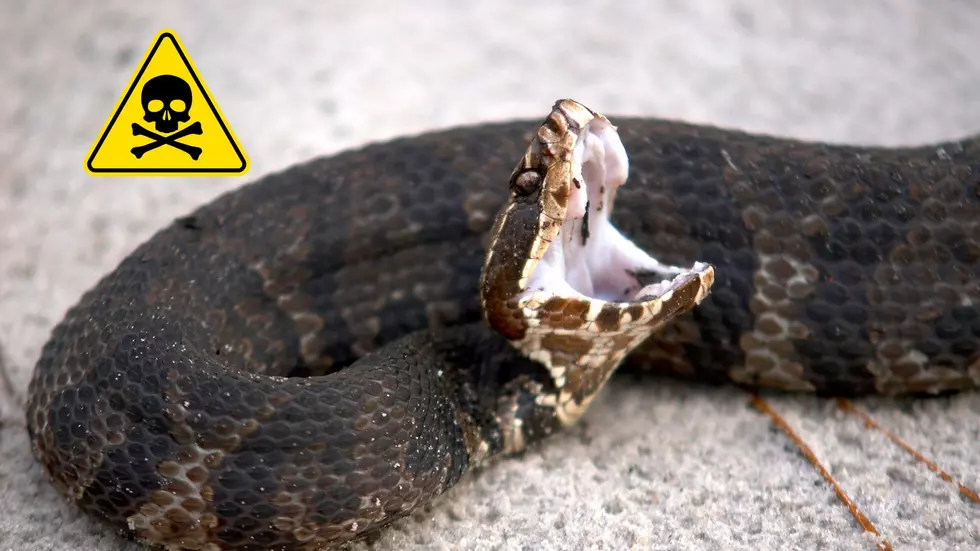
The Northern Cottonmouth has dark crossbands, a blocky, distinct triangular head, and a white, cotton-like interior lining of the mouth displayed when threatened. Cottonmouths love to hang out near slow-moving water, including swamps, marshes, sluggish streams, shallow lakes, but they'll also travel through forests in-between waterways.
Timber Rattlesnake — Crotalus horridus
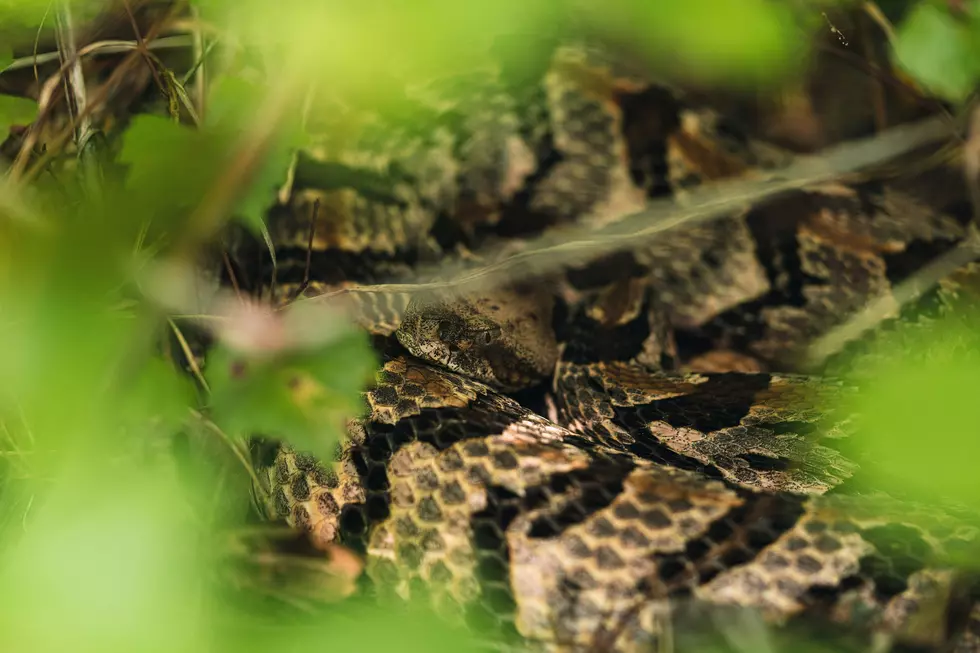
A Timber Rattlesnake features a wide, triangular head distinct from the narrow neck, heat-sensing facial pits between the eye and nostril, keeled body scales, and a prominent blunt rattle at the tail tip. It's common to accidentally run into a rattler in rocky terrain or swamp edges. True to their name, they dwell in hardwood forests and it's not uncommon to see them warming themselves on trails in sunlight.
Western Pygmy Rattlesnake — Sistrurus miliarius streckeri

Missouri Department of Conservation says the Western Pygmy Rattlesnake has "brownish gray with small dark brown or black blotches. There are 20–30 dorsal blotches, which are round or in short bars". They go on to say that their "preferred habitat is south-facing, rocky, and partially wooded hillsides" and you'll find them "under rocks, logs, brush piles, or shrubs".
Prairie Massasauga — Sistrurus tergeminus tergeminus
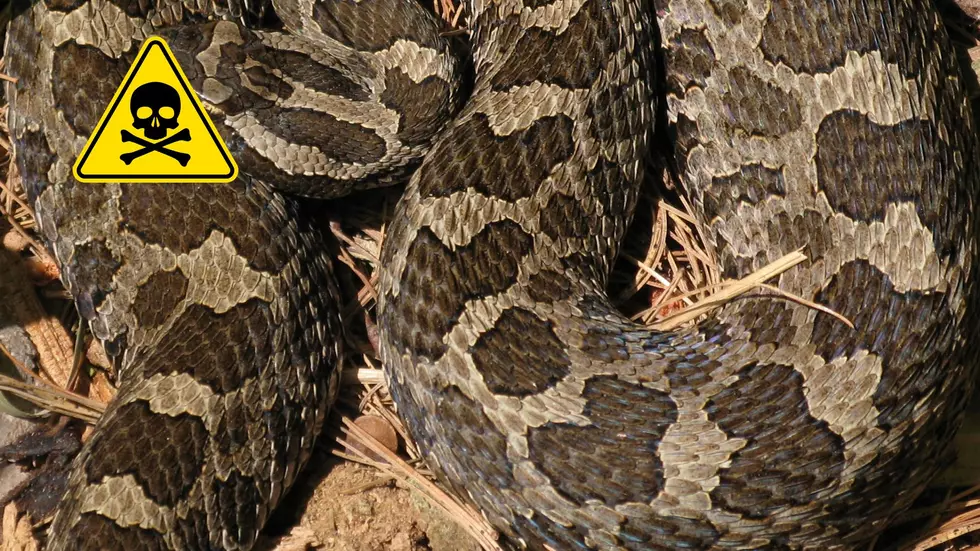
This venomous viper is found in north-central and northwestern Missouri in prairie lands. This snake is endangered and loves enjoying sunshine in open areas on occasion. They prefer rivers, lakes, and marshes where crayfish are. They have lost much of their habitat in Missouri and are the one venomous snake you are least likely to encounter.
10 Most Dangerous Missouri Places Based on Most Recent Data
Gallery Credit: Google Maps Street View
More From 100.9 The Eagle, The Tri-States' Classic Rock Station


